
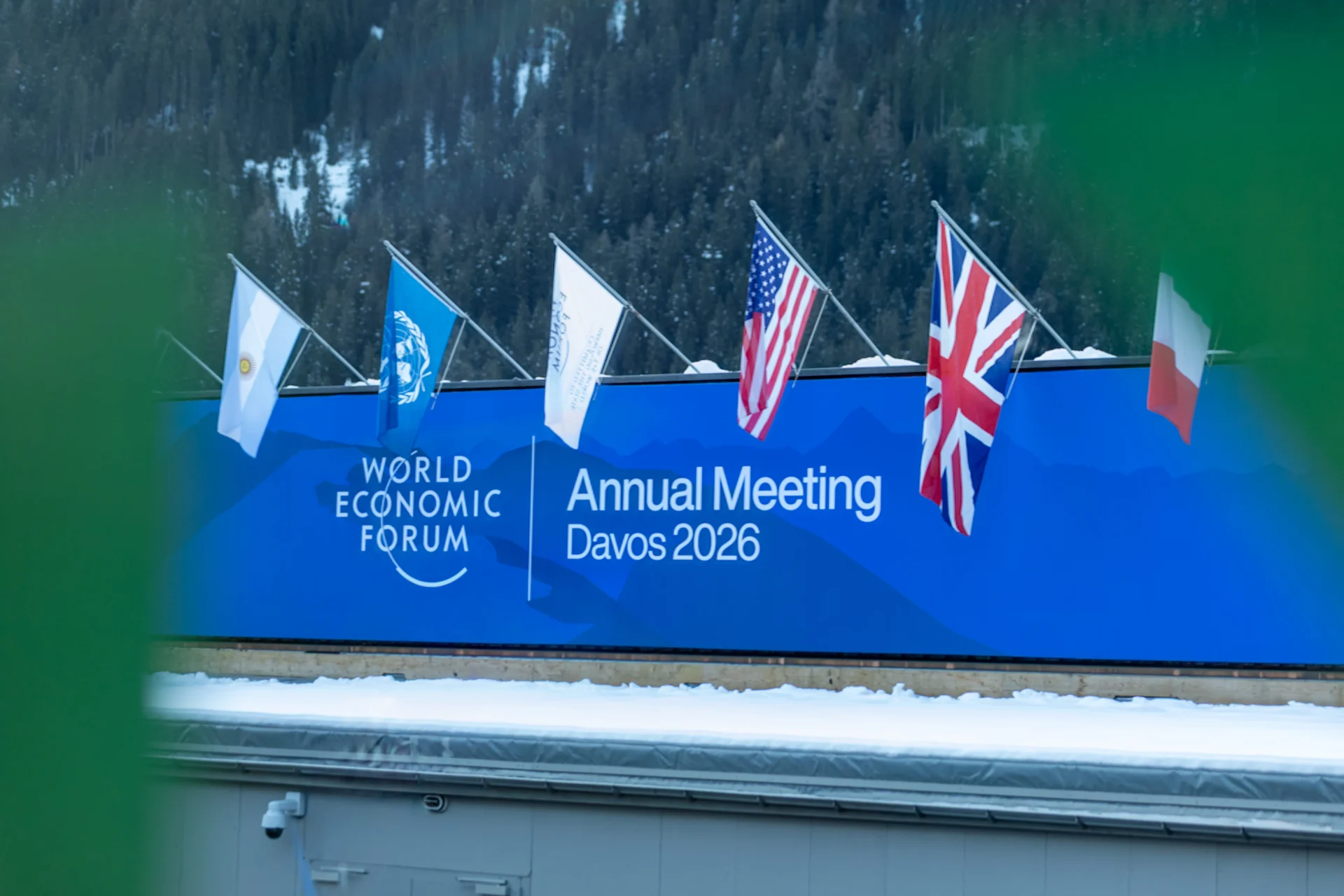
The World Economic Forum in Davos is one of the most demanding executive travel environments of the year. Global business leaders, government officials, investors, family offices, and international delegations converge on a small Alpine town where winter weather, security restrictions, limited vehicle availability, and constantly changing schedules create unusual operational challenges.
For executive assistants, corporate travel leaders, senior lifestyle managers, and family office teams, the challenge is much larger than arranging a chauffeur from Zurich to Davos.
A principal may begin the journey in New York, London, Dubai, or another international city, arrive through commercial or private aviation, transfer to Davos, move between meetings and private events throughout the week, and then continue directly to another country or business engagement.
Every segment affects the next.
The most effective approach is therefore to manage executive transportation as one coordinated international itinerary, with centralized oversight, experienced local execution, real-time monitoring, and one point of accountability from arrival through final departure.
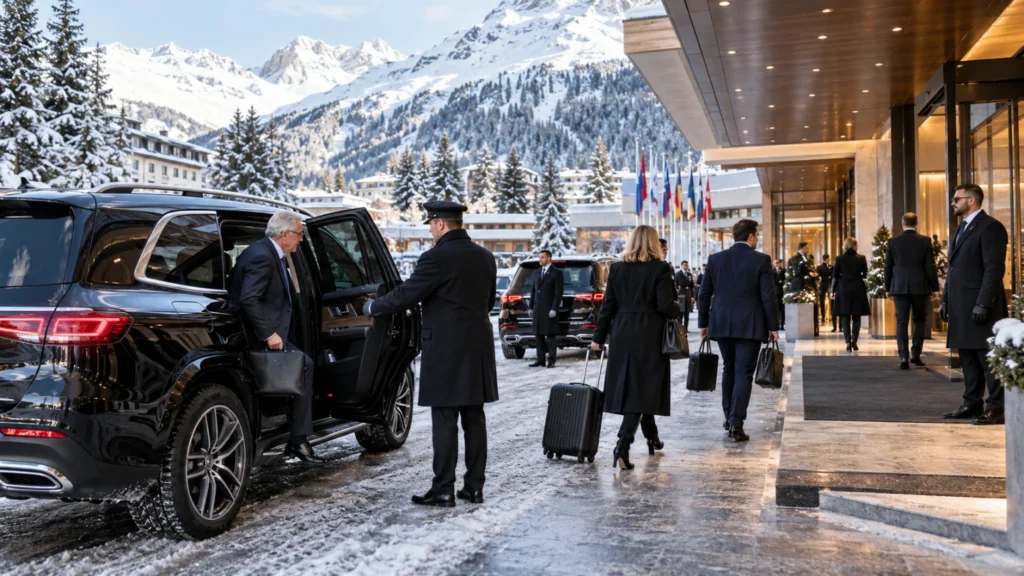
Why Is Executive Transportation During the World Economic Forum So Complex?
Davos operates differently during the World Economic Forum than it does during a normal winter week.
A relatively small Alpine destination must accommodate thousands of delegates, executives, security teams, media organizations, support staff, and private events within a compressed geographic area.
Transportation planning must account for:
- International commercial and private aviation arrivals
- Long-distance transfers between Zurich and Davos
- Winter weather and mountain road conditions
- Security perimeters and restricted vehicle access
- Changing pickup and staging locations
- Multiple meetings and private events each day
- Last-minute schedule changes
- Executive protection and privacy requirements
- Limited local transportation capacity
- Departures connecting to international flights or onward destinations
For the people responsible for the itinerary, transportation cannot be managed reactively.
It must be anticipated.
Manage the Entire Journey, Not Just Davos
One of the biggest mistakes in World Economic Forum transportation planning is treating each movement independently.
The airport transfer is booked with one provider. Davos transportation is arranged separately. Private aviation movements are handled by another contact. The executive’s onward destination becomes another reservation.
That fragmentation creates unnecessary risk.
Instead, the principal’s complete transportation itinerary should be managed as one continuous operation.
If an executive is traveling from New York to Zurich, continuing to Davos, attending meetings for several days, and then flying to London, each ground movement should be understood within the context of the entire schedule.
A delayed international flight should automatically affect the Zurich pickup.
A late-running meeting in Davos should be considered against the executive’s next commitment.
A departure from Davos should be planned around airport conditions, winter weather, traffic, security, and the actual flight schedule rather than a standard estimated drive time.
For executive assistants and lifestyle managers coordinating international principals, this level of continuity can eliminate hours of follow-up while reducing the risk of one transportation change affecting the rest of the itinerary.
Centralize Oversight Across Cities, Countries, and Time Zones
International executive travel rarely operates within one business day or one time zone.
An executive assistant in New York may be managing a principal already in Switzerland while coordinating the next movement in London or Dubai.
That is where centralized transportation oversight becomes especially valuable.
Rather than managing separate providers in each destination, one transportation coordination partner can maintain visibility across the complete itinerary while experienced local operators execute each movement on the ground.
Centralized oversight provides:
- One point of contact across locations
- Consistent service and chauffeur standards
- Visibility across active and upcoming movements
- Coordinated airport, FBO, hotel, and meeting transfers
- Real-time schedule adjustments
- 24/7 operational support across time zones
- Centralized confirmations and communication
- Consolidated billing and reporting
The executive assistant, travel manager, lifestyle manager, or family office team should not have to determine which local provider to call every time the itinerary changes.
One accountable partner should manage that complexity behind the scenes.
Plan Zurich and Private Aviation Arrivals Carefully
Zurich Airport is the primary international gateway for many travelers attending the World Economic Forum, while private aviation introduces additional FBO, aircraft, and arrival coordination requirements.
The ground transportation team should monitor the actual flight rather than simply work from the scheduled arrival time.
For commercial aviation arrivals, this means accounting for flight delays, baggage, immigration, terminal logistics, and the passenger’s actual readiness for pickup.
For private aviation, the transportation team should coordinate with the appropriate FBO or aviation contact and understand where the vehicle can stage and when the passenger will be released.
The objective is simple: the vehicle should adjust to the traveler’s actual arrival rather than requiring the traveler or assistant to manage the adjustment.
Build Realistic Time Into the Zurich-to-Davos Transfer
The journey between Zurich and Davos cannot be planned like an ordinary airport transfer.
Winter weather, mountain roads, congestion related to the Forum, security activity, and changing road conditions can all affect travel time.
A professional transportation plan should therefore build realistic buffers into both arrivals and departures.
This becomes particularly important on departure day.
Missing a dinner reservation is inconvenient.
Missing an international flight because the Davos departure was planned too tightly can disrupt the executive’s entire onward itinerary.
Transportation timing should protect the broader travel schedule, not simply estimate the distance between two points.
Use Vehicles Appropriate for Winter Conditions and the Movement
Vehicle selection in Davos should be based on operational requirements.
Passenger count, luggage, winter conditions, security needs, executive preferences, and group movements all matter.
Depending on the itinerary, transportation may include executive sedans, luxury SUVs, V-Class vehicles, Sprinter-style vans, or larger vehicles for delegations and support teams.
More important than a particular make or model is whether the vehicle is appropriately equipped for local winter conditions and operated by a chauffeur experienced with the environment.
The vehicle is one component of the transportation plan, not the plan itself.
Coordinate Daily Davos Movements as One Schedule
Once the principal reaches Davos, transportation becomes highly dynamic.
A typical day may involve:
- Congress Centre sessions
- Bilateral meetings
- Hotel meetings
- Private breakfasts or dinners
- Corporate hospitality
- Media appearances
- Investor meetings
- Receptions and evening events
These should not be treated as isolated bookings.
The transportation operations team should maintain visibility across the complete day, understand which movements are time-sensitive, and adjust positioning as the schedule changes.
If a meeting runs long, the next vehicle movement should be adjusted proactively.
If access to a pickup point changes, an alternate meeting location should be coordinated before the principal is ready to depart.
If an evening event runs later than expected, the transportation plan should adapt without requiring the traveler to begin making calls.
This is the difference between booking transportation and managing it.
Confirm Access and Pickup Locations Continuously
During a high-security international event, access conditions can change.
Road closures, security perimeters, venue restrictions, and staging requirements may affect where vehicles can safely and legally meet passengers.
Pickup instructions should therefore be reconfirmed as conditions evolve rather than assumed to remain
unchanged throughout the week.
Clear communication between local operations, chauffeurs, the centralized transportation desk, and the executive’s team helps prevent the principal from waiting at an inaccessible location while a chauffeur circles nearby.
The traveler should receive simple instructions.
The operational complexity should remain behind the scenes.
Integrate Transportation With Executive Protection and Security
For high-profile principals, transportation cannot operate independently from security.
Executive protection teams may have specific requirements for:
- Chauffeur vetting
- Vehicle specifications
- Routing
- Staging
- Passenger information
- Arrival and departure procedures
- Backup vehicles
- Communication protocols
The transportation operation should work within those requirements and maintain clear communication with the principal’s security team.
For family offices, senior executives, public figures, and government-related travelers, discretion should be built into the operating process rather than treated as an additional service.
Build Contingency Planning Into the Operation
The question is not whether plans will change during World Economic Forum week.
They will.
The more important question is how the transportation operation responds when they do.
Before the first movement, the team should understand:
- What happens if a flight is delayed?
- What happens if a chauffeur or vehicle becomes unavailable?
- What happens if weather affects the Zurich-Davos route?
- What happens if a pickup location becomes inaccessible?
- What happens if a meeting runs significantly late?
- What happens if the principal changes the next destination?
- Who is available to make decisions outside normal business hours?
A strong transportation operation anticipates these situations and manages them quietly.
The executive should experience the solution, not the problem.
Why 24/7 Live Support Matters for International Executive Travel
International executive itineraries do not operate from 9 to 5.
When a principal is traveling across countries and time zones, a schedule change in Switzerland may happen while the executive assistant’s office in the United States is closed.
Flights may be delayed overnight. Meetings can move. Private aviation schedules change. Weather can affect departure planning.
That is why 24/7 live operational support is particularly important during events such as the World Economic Forum.
Someone should always be monitoring the transportation operation and able to adjust the itinerary without waiting for the next business day.
For the executive’s team, that means fewer late-night calls, fewer local providers to manage, and confidence that someone is actively watching the movement.
Plan the Departure Before the Executive Arrives
Departure planning should not begin on the final day.
The transportation team should understand the principal’s onward itinerary before World Economic Forum week begins.
That includes:
- Commercial or private aviation departure
- Required airport or FBO arrival time
- Expected Davos departure window
- Winter weather considerations
- Traffic and security conditions
- Luggage requirements
- Any intermediate meetings or stops
- Transportation requirements at the next destination
For a multi-country itinerary, the departure from Davos may simply be the next segment of a much larger executive travel plan.
Managing that continuity is where centralized international transportation coordination provides its greatest value.
Frequently Asked Questions
How early should executive transportation be arranged for the World Economic Forum?
Transportation should be planned as early as possible once the executive’s attendance and preliminary itinerary are known. Demand for experienced chauffeurs, appropriate winter vehicles, and larger-capacity vehicles can become limited as the event approaches. Early planning also allows time to coordinate airport or FBO arrivals, Davos movements, security requirements, and onward transportation.
What is the best way to manage transportation from Zurich to Davos?
The transfer should be pre-arranged with an experienced chauffeur and monitored against the traveler’s actual flight arrival. The transportation plan should account for winter weather, traffic, luggage, airport or FBO procedures, and sufficient buffer time for the mountain journey.
Can one transportation partner manage an executive’s entire international WEF itinerary?
Yes. A global executive transportation partner can coordinate airport and FBO transfers, Zurich-Davos transportation, daily movements in Davos, departure transfers, and transportation in the executive’s next destination under one centralized operating structure.
Why is centralized transportation coordination important during the World Economic Forum?
Centralized coordination gives executive assistants, travel managers, lifestyle managers, and family office teams one point of accountability across multiple movements, cities, countries, and time zones. It also allows schedule changes in one location to be managed within the context of the executive’s complete itinerary.
Can transportation coordinate with an executive protection team?
Yes. Transportation planning can be aligned with executive protection requirements including chauffeur vetting, vehicle specifications, routing, staging, communication protocols, and backup planning.
What happens if an executive’s meeting runs late in Davos?
With real-time operational oversight, the transportation team adjusts the chauffeur, vehicle positioning, and subsequent movements around the revised schedule. The objective is to manage the change proactively without requiring the principal or executive assistant to coordinate each adjustment.
Why is 24/7 support important for international executive transportation?
International itineraries cross time zones and rarely follow normal office hours. Live 24/7 support allows flight delays, schedule changes, weather disruptions, and last-minute movements to be addressed
immediately while maintaining continuity across the executive’s itinerary.
Conclusion
Managing executive transportation during the World Economic Forum requires much more than reserving a chauffeur in Davos.
It requires understanding the principal’s complete journey and managing each movement as part of one
connected international itinerary.
For executive assistants, corporate travel leaders, senior lifestyle managers, and family office teams, the value of centralized transportation coordination is control: one point of accountability across airports, FBOs, cities, countries, local chauffeurs, schedule changes, and time zones.
With experienced local execution, proactive monitoring, 24/7 operational oversight, and contingency planning, even a complex World Economic Forum itinerary can remain predictable and controlled.
The executive does not need to think about what changed, which provider to call, or how the next movement will be affected.
It is already being handled.
