
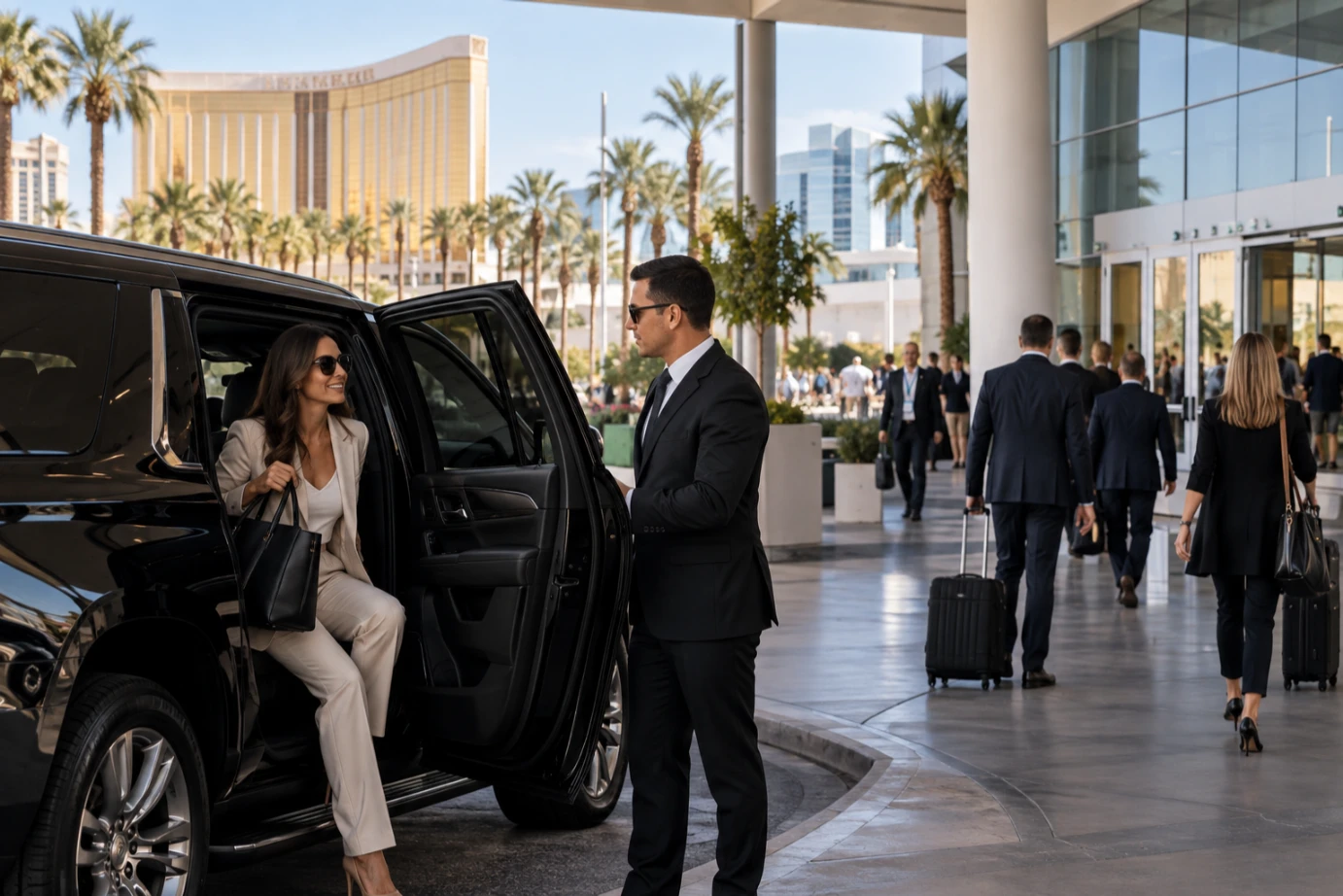
IMEX America brings thousands of meeting professionals, corporate travel leaders, event executives, exhibitors, hosted buyers, and industry partners to Las Vegas for several days of meetings, networking, hospitality, and private events.
For the professionals responsible for those programs, executive transportation is not simply about arranging airport pickups or getting attendees to Mandalay Bay.
Executives may arrive on different flights. VIP clients may have separate schedules. Leadership teams may move between the convention, hotels, private meetings, dinners, and hospitality events. Exhibiting teams may require group transportation while senior executives need individual vehicles. Flights change, meetings run long, and evening plans evolve.
The transportation partner needs to manage all of those movements without becoming another operational burden for the event team.
The most effective approach is to treat transportation as one coordinated component of the overall event program, supported by centralized oversight, experienced local execution, real-time monitoring, and one point of accountability from the first airport arrival through the final departure.
Why Is Executive Transportation During IMEX America More Complex Than It Appears?
Las Vegas is built for major conventions, but that does not make transportation simple. Large events concentrate thousands of attendees around the same hotels, convention facilities, restaurants, and entertainment venues at similar times.
At the same time, an event team’s transportation requirements may extend far beyond the convention center.
A complete IMEX America transportation program may include:
- Commercial airport arrivals and departures
- Private aviation and FBO transfers
- Executive and VIP transportation
- Exhibitor and corporate team movements
- Hotel-to-convention transfers
- Client meetings
- Off-site events
- Executive dinners
- Corporate hospitality
- Group transportation
- Late-night returns
- Multi-city or onward executive travel
These movements may all operate on different schedules.
That is why the transportation strategy should be built around the entire event program, not a collection of individual rides.
Look for a Transportation Partner That Operates Like Part of Your Event Team
One of the most important qualities in an event transportation partner is operational ownership. The provider should understand the event schedule, key travelers, venues, arrival patterns, vehicle requirements, and escalation procedures before the first passenger arrives.
For the event professional, that means having one transportation team that can manage:
- Reservations and confirmations
- Chauffeur communication
- Airport and FBO arrivals
- Vehicle assignments
- Schedule changes
- Group movements
- Venue staging
- Live transportation status
- Last-minute requests
- Escalations and contingencies
The event team should not have to coordinate individual chauffeurs or repeatedly explain the program every time something changes.
Transportation should operate as an extension of the event plan.
Centralize Oversight Across Executives, Guests, and Groups
Fragmented transportation becomes increasingly difficult to manage as an event grows. One provider handles airport arrivals. Another manages executives. A separate company handles group transportation. Individual attendees arrange their own rides.
Each additional provider creates another communication channel, service standard, confirmation process, and escalation point. Centralized transportation coordination brings those movements under one operational structure.
For event professionals and corporate travel teams, that can provide:
- One point of accountability
- One coordinated transportation plan
- Consistent service standards
- Centralized communication
- Real-time visibility across active movements
- Coordinated schedule adjustments
- Multi-vehicle and multi-group oversight
- 24/7 live operational support
- Consolidated reporting and billing
The larger and more complex the program becomes, the more valuable that centralized structure becomes.
Make Scalability a Core Requirement
An event transportation partner should be able to support the program as requirements change. An initial plan may call for several airport transfers and executive SUVs. As the event approaches, additional attendees may be added, a client dinner may require group transportation, or leadership may decide to host an off-site event.
Transportation capacity may need to expand from individual executive movements to:
- Multiple sedans and SUVs
- Sprinter-style vehicles
- Executive vans
- Mini coaches
- Motor coaches
- Simultaneous airport arrivals
- Multiple hotel movements
- Separate executive and attendee programs
Scalability is not simply about having access to more vehicles. It is the ability to add capacity while maintaining the same communication structure, service standards, operational visibility, and accountability across the program.
Local Operational Knowledge Matters
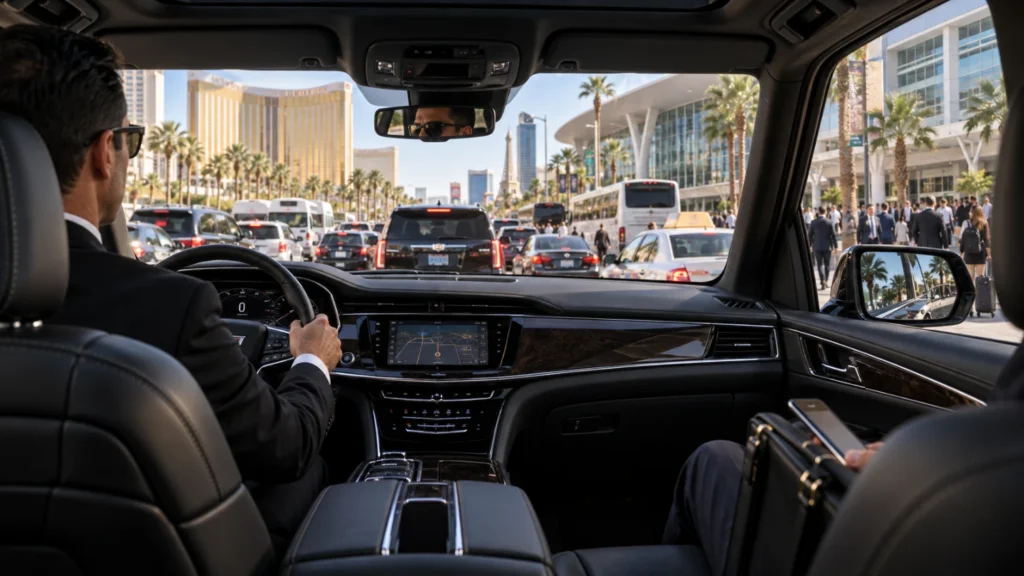
Las Vegas traffic patterns can change significantly during major conventions and citywide events. The transportation operation should understand hotel access, convention traffic, vehicle staging, airport procedures, venue entrances, and alternate routing throughout the event.
But local knowledge should not depend solely on whether one individual chauffeur remembers a particular entrance. It should exist throughout the operating structure. The local chauffeur, dispatch team, and centralized transportation operation should all have the information necessary to execute each movement properly.
When conditions change, updated instructions should be communicated before the passenger is ready to depart. The traveler should receive a simple pickup instruction. The operational complexity should remain behind the scenes.
Coordinate Airport and FBO Arrivals With the Event Schedule
Airport transportation should be integrated into the broader event plan rather than treated as a standalone transfer. Commercial flights should be monitored so pickup timing adjusts around actual arrivals.
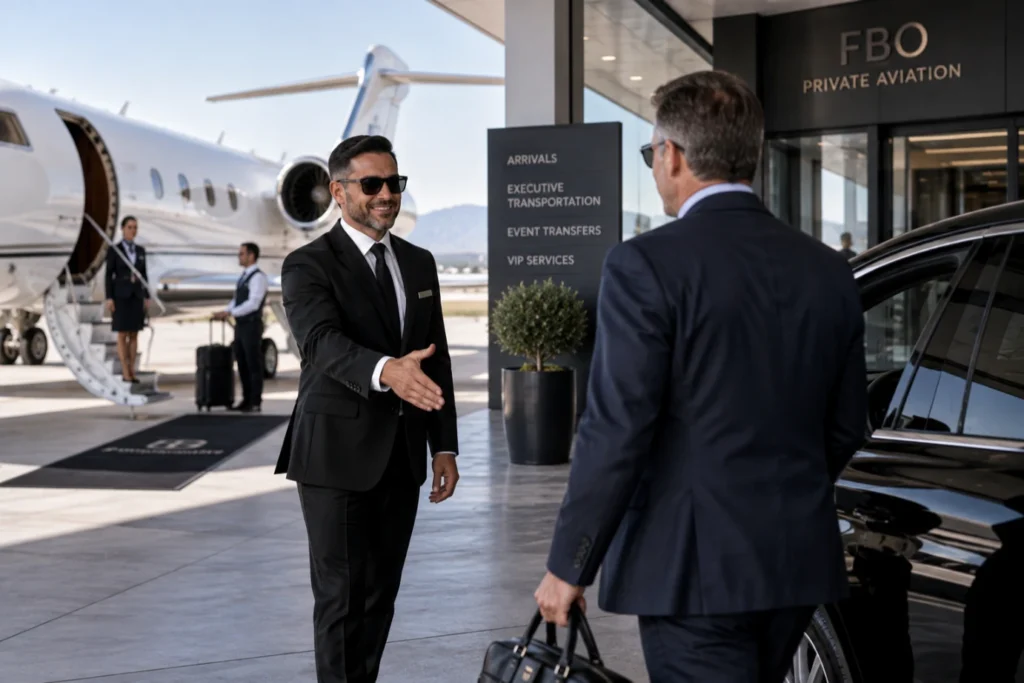
For private aviation, transportation should be coordinated around aircraft timing, FBO procedures, passenger release, vehicle staging, and the executive’s onward itinerary. This becomes particularly important when multiple executives or guests are arriving throughout the same day.
Instead of the event team tracking every flight and contacting individual chauffeurs when something changes, the transportation operation should be monitoring arrivals and adjusting accordingly. A delayed flight should create an operational adjustment, not another task for the event planner.
Match Vehicles to the Movement, Not Just the Passenger Count
Passenger count matters, but it is not the only consideration when selecting vehicles.
The transportation plan should also account for:
- Executive and VIP requirements
- Luggage
- Exhibition or presentation materials
- Privacy
- Business calls
- Security
- Group composition
- Venue access
- Schedule flexibility
A senior executive may require an individual sedan or chauffeur SUV. A leadership team may benefit from an executive van or Sprinter vehicle that allows the group to travel together. A larger corporate or exhibitor group may require mini coaches or motor coaches.
The objective is to select the transportation model that best supports the movement rather than simply filling seats.
Plan Daytime and Evening Transportation as One Program
One of the easiest ways for an event transportation plan to become fragmented is to separate convention transportation from evening activities. The daytime schedule may end at Mandalay Bay, but the transportation requirements often continue.
Executives and clients may move to:
- Private dinners
- Networking receptions
- Corporate hospitality
- Sponsor events
- Entertainment
- Client meetings
- After-parties
- Other hotels and venues
Those evening movements should be incorporated into the transportation plan before the event begins. If a dinner changes or a reception runs late, the transportation team should be able to adjust the next movement without requiring the event planner to start sourcing transportation again.
The event day ends when the final traveler is where they need to be, not when the exhibit hall closes.
Real-Time Change Management Is Essential
No major event follows the original transportation manifest perfectly.
- Flights arrive late.
- Meetings run over.
- Guest counts change.
- Executives add commitments.
- Dinner reservations move.
- Groups divide into smaller parties.
A professional transportation operation needs to manage those changes in real time. When one movement changes, the transportation team should evaluate how it affects subsequent vehicles, passengers, and schedules.
That may mean repositioning vehicles, adjusting chauffeur assignments, changing pickup times, or adding capacity. The event professional should be informed when necessary without being forced to personally manage every adjustment.
That is the difference between having transportation reservations and having transportation oversight.
Ask About Contingency Planning Before the Event Begins
Transportation problems are not always preventable. Vehicles can experience mechanical issues. Flights can be disrupted. Roads can close. Passenger counts can change. Weather or other citywide events can affect travel conditions. The important question is how the transportation partner responds.
Before the program begins, event professionals should understand:
- Who monitors active transportation
- Who has authority to make operational adjustments
- How replacement vehicles are sourced
- How last-minute passenger changes are handled
- How airport delays are managed
- What happens if a chauffeur or vehicle becomes unavailable
- Who is available outside normal business hours
- How escalations are communicated
A contingency plan is most valuable when it exists before something goes wrong.
Look Beyond Direct Fleet Ownership
Direct fleet ownership can be valuable for a local operator, but it should not be the defining requirement for a sophisticated event transportation program.
For multi-city, nationwide, or international programs, the more important questions are:
Who controls the service standard? Who monitors the movement? Who takes accountability when something changes?
A strong transportation management partner may coordinate vetted local operators while maintaining centralized standards, communication, monitoring, and escalation.
This model can actually provide greater flexibility for organizations that require transportation across multiple cities.
What matters is that the event team has one accountable partner, regardless of which qualified local operation physically provides the vehicle.
Think Beyond Las Vegas
For many executives attending IMEX America, Las Vegas is only one part of a larger business itinerary.
An executive may arrive from another meeting, attend IMEX for two days, and depart directly for a client visit or event in another city or country.
A nationwide or global transportation partner can coordinate those movements under the same operating structure.
That means the Las Vegas airport departure and the executive’s next-city arrival do not become separate transportation projects.
For executive assistants, event teams, lifestyle managers, and corporate travel leaders coordinating across cities and time zones, continuity significantly reduces administrative work.
One transportation partner can follow the itinerary from beginning to end.
Why 24/7 Live Operational Support Matters
Event transportation rarely operates only during normal business hours.
Early airport departures, delayed evening flights, dinners, receptions, private events, and last-minute schedule changes can all happen outside the traditional workday.
Someone needs to remain accountable.
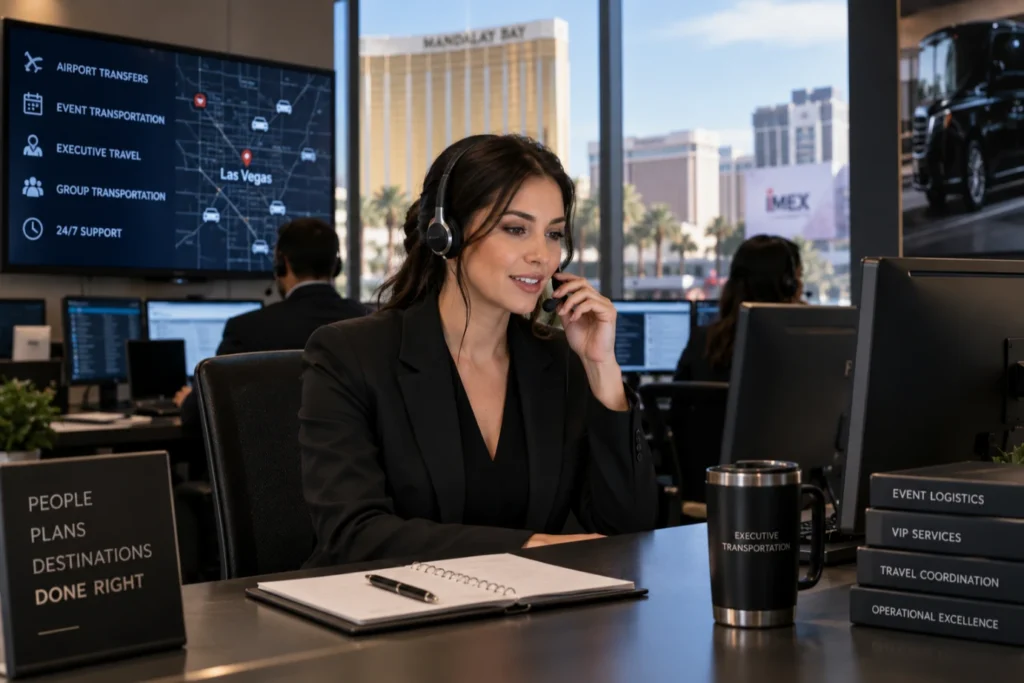
A 24/7 live transportation operation can monitor active movements, communicate with chauffeurs, adjust schedules, respond to delays, and coordinate changes without waiting until the following morning.
For the event professional, the benefit is straightforward:
You should not have to become the transportation dispatch desk for your own event.
What Should Event Professionals Ask an Executive Transportation Partner?
Before selecting a transportation partner for IMEX America, ask questions that reveal how the operation actually works:
- Who will be our primary point of contact?
- Who monitors transportation while the event is active?
- How are chauffeurs and local operating partners vetted?
- How are flight delays handled?
- Can you coordinate commercial and private aviation arrivals?
- How do you manage multiple executives with different schedules?
- Can you scale from individual SUVs to group transportation?
- How are last-minute itinerary changes handled?
- What is the escalation process if something goes wrong?
- Is live operational support available 24/7?
- Can transportation be coordinated in our executives’ other destinations?
- Can billing and reporting be consolidated across the program?
Vehicle pricing matters.
But for a complex corporate event, operational accountability matters more.
Frequently Asked Questions
What is the best executive transportation option for IMEX America?
There is no single vehicle or service model that is right for every IMEX America program. The best solution depends on the number of executives and attendees, airport requirements, event schedule, evening activities, group movements, and level of flexibility required. A centralized transportation plan can combine executive sedans, SUVs, Sprinter-style vehicles, and larger group transportation under one operating structure.
How early should transportation be arranged for IMEX America?
Transportation planning should begin once the event schedule, hotel arrangements, and approximate attendee requirements are known. Earlier planning is particularly valuable for larger groups, multiple executives, private aviation movements, specialized executive vehicles, and programs requiring transportation across several days.
Can one transportation partner manage executives and larger attendee groups?
Yes. A coordinated event transportation program can manage individual executives, VIP guests, leadership teams, and larger attendee groups simultaneously while maintaining separate schedules and vehicle requirements under one centralized operation.
Can executive transportation coordinate private aviation arrivals?
Yes. Transportation can be coordinated around private aviation schedules, FBO procedures, passenger release, staging requirements, and the executive’s onward itinerary.
What happens if flights or meeting schedules change?
With real-time operational oversight, pickup times, chauffeur assignments, vehicle positioning, and subsequent movements can be adjusted around the revised schedule. The goal is to manage changes proactively without requiring the event professional to rebuild individual reservations.
Is a dedicated chauffeur necessary during IMEX America?
Not always. Executives with dense or highly flexible schedules may benefit from an hourly or dedicated chauffeur, while other travelers may be better served through coordinated point-to-point transportation. The service model should be designed around the itinerary.
Why is centralized transportation valuable for event professionals?
Centralized coordination gives the event team one point of accountability across executives, attendees, airports, hotels, convention movements, dinners, and off-site events. It reduces fragmented communication and allows transportation changes to be managed within the context of the entire event program.
Can the same transportation partner manage other cities before or after IMEX America?
Yes. A nationwide or global executive transportation partner can coordinate the Las Vegas program along with ground transportation in other cities or countries, maintaining consistent service standards, communication, reporting, and operational oversight across the itinerary.
Why is 24/7 support important for event transportation?
Events often involve early arrivals, late-night activities, flight disruptions, and schedule changes outside normal business hours. Live 24/7 operational support ensures transportation can continue adapting without shifting responsibility back to the event team.
Conclusion
The best executive transportation partner for IMEX America is not simply the company with the newest vehicles or the lowest hourly rate.
It is the partner that understands the event program, anticipates operational challenges, adapts when schedules change, and remains accountable from the first airport arrival through the final departure.
For event professionals, executive assistants, corporate travel leaders, and lifestyle managers, transportation should function as an extension of the event operation: centralized, scalable, locally informed, actively monitored, and supported in real time.
Whether coordinating one executive, an entire leadership team, VIP clients, or hundreds of attendee movements, the objective remains the same. The event team should have visibility and control without having to personally manage every ride.
The guests experience a seamless journey. The event team stays focused on the event. The transportation is handled.
