
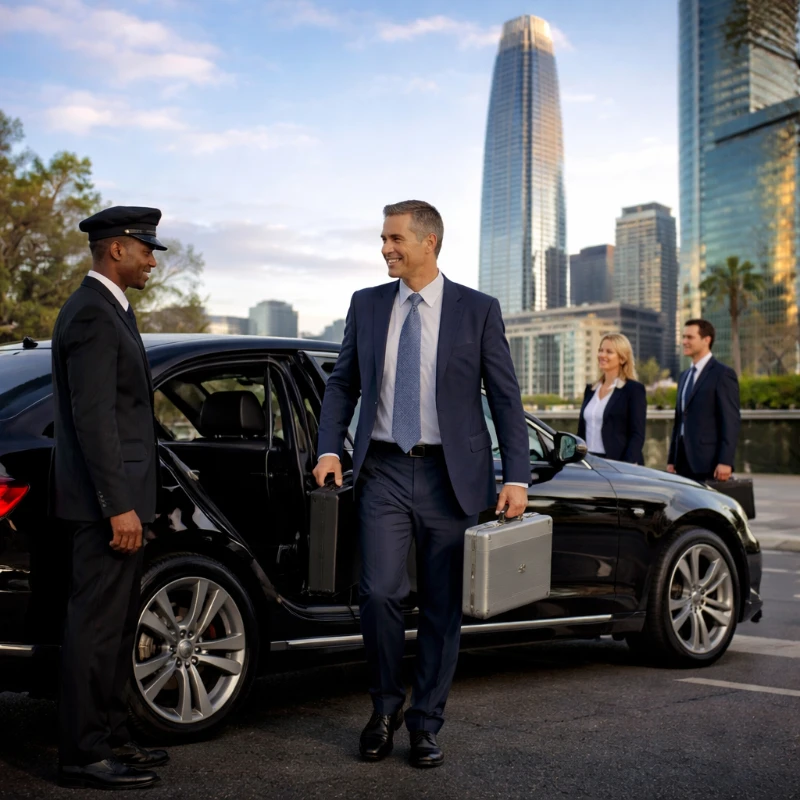
Each year, Dreamforce transforms San Francisco into one of the busiest technology gathering points in the world. Thousands of executives, founders, investors, and global technology leaders travel to the city for several days of conferences, product launches, networking events, and private meetings.
For senior lifestyle managers, executive assistants, corporate travel leaders, and personal assistants supporting high-profile principals, transportation during Dreamforce cannot be approached as routine city travel. The event reshapes traffic patterns across downtown San Francisco, places extraordinary pressure on hotels and venues, and creates tightly packed executive schedules that leave little room for logistical disruption.
The same operational model used for global events such as the FIFA World Cup, UN General Assembly, and major sporting finals applies here. At this level, transportation is no longer a booking function, it becomes a centralized operational system.
The Dreamforce Environment and What It Means for Transportation
During this week, moving from one engagement to another predictably and discreetly becomes a critical operational responsibility.
This is not standard conference travel. It is high-density, high-visibility coordination where schedules, reputations, and executive productivity depend on reliable movement throughout the city.
Dreamforce is primarily centered around the Moscone Center in downtown San Francisco, but the event extends far beyond the convention halls. Satellite meetings, executive briefings, investor sessions, and networking events occur across numerous hotels, office buildings, and private venues throughout the city.
During the conference week, large portions of the downtown corridor experience:
- Temporary street closures
- Increased pedestrian-only zones
- Event staging areas and equipment setups
- Heavy traffic congestion
- High demand for transportation access near major venues
Common destinations during Dreamforce often include:
- Moscone Center conference halls
- Major downtown hotels hosting executive delegations
- Corporate headquarters in the surrounding tech district
- Private investor meetings
- Evening networking events and executive dinners
Because these engagements are often scheduled back-to-back, transportation must operate as a structured coordination system rather than a sequence of independent bookings.
1. Plan Around Executive Schedules, Not Individual Trips
Executives attending Dreamforce rarely move between only two locations. Most maintain tightly structured schedules involving multiple engagements across the city.
Executive airport transportation planning should therefore align with the complete daily itinerary rather than single-point transfers.
Typical movement milestones may include:
- Airport arrivals
- Hotel check-in and preparation time
- Conference keynote sessions
- Investor meetings or private briefings
- Corporate hospitality events
- Evening networking gatherings
For example, a senior technology executive attending Dreamforce may:
- Arrive at San Francisco International Airport
- Attend a leadership briefing at a nearby hotel
- Deliver or attend a keynote session at Moscone Center
- Participate in investor or partner meetings
- Attend a private executive dinner
Transportation must be mapped around the entire sequence to ensure each movement occurs smoothly within the larger schedule.
Planning around movement milestones preserves predictability even when schedules shift during the day.
2. Account for Event Closures and Downtown Congestion
Dreamforce significantly alters normal traffic patterns across downtown San Francisco.
Large-scale conferences introduce temporary road restrictions near Moscone Center and surrounding venues. At the same time, thousands of attendees move between sessions, hotels, and networking events.
Transportation planning must account for:
- Street closures around event venues
- Temporary pedestrian zones
- Increased rideshare congestion near conference entrances
- Limited curbside access for pickups and drop-offs
Arrival windows should be structured to avoid peak congestion periods near the convention center.
Understanding these operational realities allows planners to maintain reliable movement even when the city is operating under unusual conditions.
3. Maintain Centralized Coordination Across All Movements
Executives attending Dreamforce often maintain highly dynamic schedules. Meetings may shift locations or times depending on investor availability, speaking commitments, or internal corporate discussions.
Fragmented transportation bookings introduce unnecessary risk in this environment. Centralized coordination provides a structured approach that includes:
- A single operational point overseeing all movements
- Continuous communication with chauffeurs and operations teams
- Unified visibility across the executive’s itinerary
- Consistent movement protocols throughout the event week
This structure ensures that vip transportation remains aligned with the executive’s evolving schedule.
For executive assistants and travel coordinators, centralized oversight reduces complexity while preserving control.
4. Build Buffer Strategy Into the Daily Agenda
During Dreamforce week, even short trips within downtown San Francisco can become unpredictable due to traffic congestion and event-related road restrictions.
Buffer planning becomes essential for maintaining reliable schedules. Transportation timelines should incorporate additional time for:
- Traffic congestion near Moscone Center
- Event security checkpoints
- Elevator delays within busy conference hotels
- Venue access limitations during peak sessions
For high-profile executives, visible delays can affect meeting schedules and professional perception.
Structured buffers allow schedules to remain stable despite changing city conditions.
5. Establish Clear Communication With Executives and Assistants
Executives attending major conferences rarely have time to manage logistical details. Clear communication ensures they know exactly when and where movements will occur.
Effective communication should include:
- Confirmed departure window
- Clearly defined meeting points
- Contact information for operational support
- Real-time updates when adjustments occur
Providing concise instructions allows executives to move confidently between engagements without needing to manage transportation themselves.
This clarity becomes especially important when meetings change locations during the day.
6. Leverage Local Knowledge of San Francisco Event Operations
San Francisco presents unique logistical challenges during large conferences. Local operational experience helps anticipate factors such as:
- Congestion patterns around Moscone Center
- Hotel loading zone limitations
- Optimal pickup locations near conference venues
- Traffic shifts caused by event staging or closures
These operational details are often not visible through navigation tools but significantly affect real-world travel times.
Working with teams familiar with the city’s event operations allows transportation strategies to reflect real conditions.
7. Monitor Real-Time Conditions Throughout the Day
Because Dreamforce schedules and city traffic patterns shift rapidly, transportation coordination should rely on continuous monitoring rather than fixed plans.
Operational oversight may include:
- Tracking flight arrivals for incoming executives
- Monitoring downtown traffic conditions
- Maintaining direct communication with chauffeurs
- Adjusting pickup locations or routes when needed
Continuous monitoring helps maintain control even when conference schedules evolve throughout the day.
8. Coordinate Multiple Executives Within a Single Plan
Corporate leadership teams frequently attend Dreamforce together. Several executives from the same organization may be participating in different sessions, meetings, or networking events simultaneously.
Centralized coordination allows planners to manage multiple principals within one structured system by:
- Tracking movements for each executive
- Coordinating staggered arrivals at conference venues
- Managing separate meeting schedules across the city
- Maintaining visibility across the entire travel plan
This structure allows executive assistants to maintain control without supervising each movement individually.
9. Establish Escalation Procedures for Schedule Changes
Conference environments are inherently fluid. Meetings often extend longer than expected, sessions shift, or last-minute engagements are added.
Transportation plans should include clear escalation procedures to handle these adjustments.
Effective escalation structures may include:
- Defined operational decision points
- Immediate access to coordination support
- Preplanned alternate pickup locations
- Direct communication channels for assistants
This structure ensures that schedule adjustments are handled quickly without disrupting the executive’s day.
10. Secure Transportation Capacity Before the Conference Week
Dreamforce attracts tens of thousands of attendees, including executives from global technology firms, venture capital organizations, and enterprise companies.
Transportation demand during the conference week increases dramatically. Securing transportation arrangements early allows planners to:
- Confirm operational oversight
- Align transportation with conference schedules
- Establish contingency plans for schedule changes
- Ensure consistent coverage throughout the event
Early planning protects executive travel plans during one of the busiest weeks in San Francisco’s event calendar.
For organizations managing executive travel during high-density events like Dreamforce, centralized transportation coordination ensures consistency, control, and reliability across every movement. VIP Ride supports multi-day, multi-stop executive travel with a single point of oversight across all movements.
Frequently Asked Questions
Q#1: How do executive assistants manage transportation during Dreamforce?
Executive assistants manage transportation during Dreamforce most effectively through centralized coordination rather than individual bookings. By aligning all movements with the executive’s full itinerary, they gain real-time visibility, consistent communication, and the ability to adjust schedules as plans change.
This approach reduces follow-ups, minimizes risk, and allows assistants to maintain control without managing each movement individually.
Q#2: Why is transportation difficult during Dreamforce in San Francisco?
Transportation during Dreamforce is challenging due to street closures, pedestrian zones, limited curb access, and heavy congestion around downtown San Francisco and the Moscone Center. At the same time, thousands of attendees are moving between tightly scheduled engagements.
These conditions make standard point-to-point booking unreliable, requiring structured planning and real-time coordination to maintain predictable movement.
Q#3: Should transportation be booked individually or centrally during major conferences?
Transportation should be managed centrally rather than booked individually. Fragmented bookings create gaps in communication, inconsistent service, and limited visibility across the itinerary.
A centralized approach ensures all movements are coordinated under one system, improving consistency, control, and the ability to adapt as schedules change.
Q#4: How early should transportation be booked for Dreamforce?
Transportation should be secured as early as possible once schedules are confirmed. Demand during Dreamforce often exceeds available capacity, especially near key venues.
Early booking ensures availability, allows for proper planning, and provides flexibility to manage last-minute changes without losing control.
Q#5: How can multiple executives be coordinated across a single Dreamforce schedule?
Multiple executives can be coordinated through a centralized system that manages all movements under one plan. This provides visibility across schedules, consistent service standards, and the ability to adjust in real time.
It allows assistants and lifestyle managers to manage multiple principals without complexity or overlap.
Conclusion
Coordinating executive transportation during Dreamforce requires more than arranging travel between locations. It requires structured planning, centralized oversight, and continuous operational monitoring.
For senior lifestyle managers, executive assistants, corporate travel leaders, and personal assistants, transportation should function as a controlled operational system rather than a reactive task.
By integrating transportation into the broader conference strategy, with predictable schedules, real-time oversight, and locally informed planning, movements remain structured even during one of the busiest technology gatherings in the world.
