
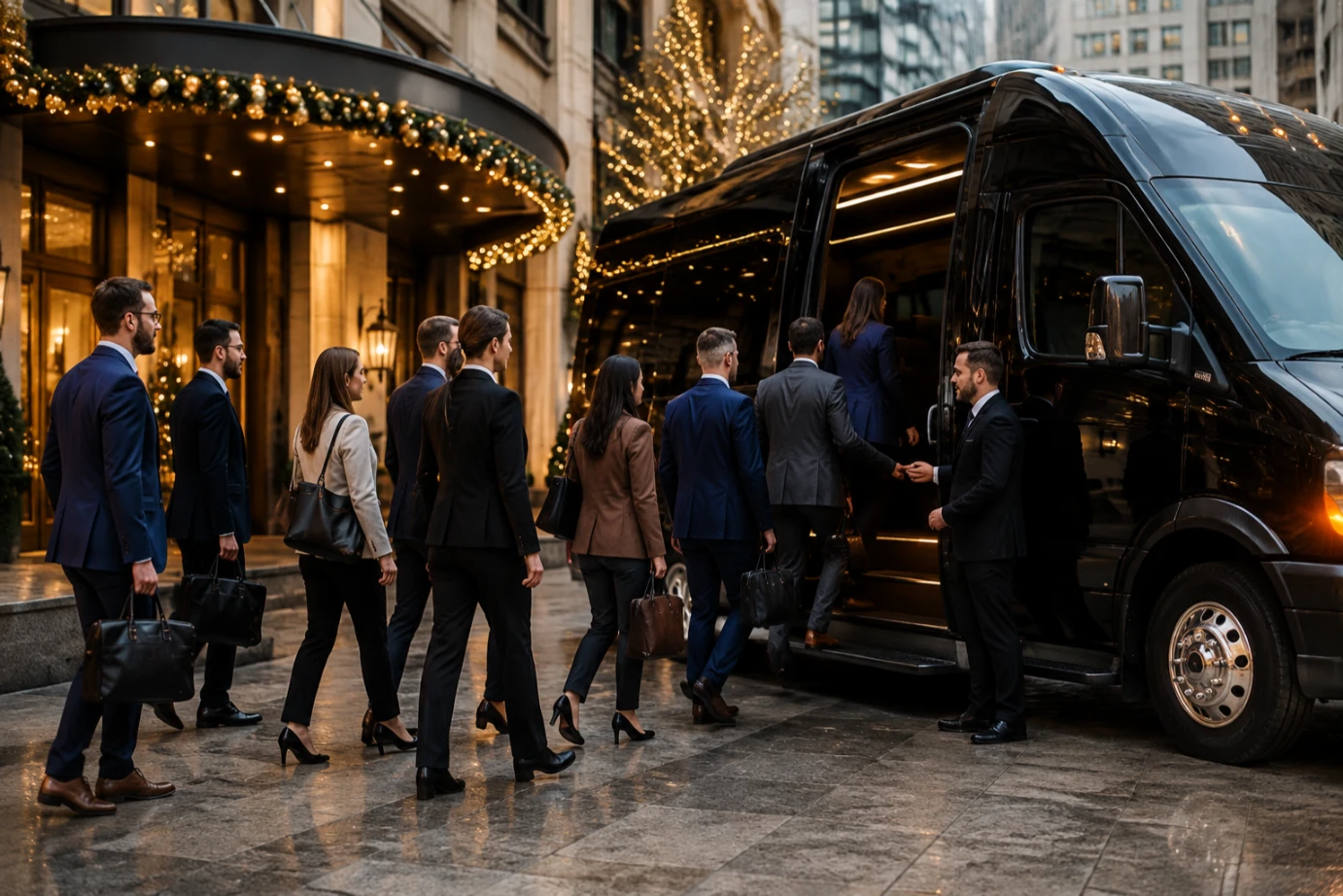
Corporate holiday parties and galas create a unique transportation challenge. Executives, board members, clients, and VIP guests may be moving from different offices, homes, hotels, airports, and private meetings into the same event, often during one of the busiest travel periods of the year.
For executive assistants, corporate travel leaders, event directors, and lifestyle managers, the real challenge is not simply reserving vehicles. It is making sure every movement happens reliably, predictably, and with as little intervention as possible.
That requires treating executive transportation as a coordinated program rather than a series of one-off bookings. One point of accountability. One operational standard. Centralized oversight. Vetted chauffeurs. Real-time monitoring. And the ability to adjust quietly when meetings run late, weather changes, or the event does not follow the original schedule.
When properly managed, transportation simply becomes one less thing the internal team has to worry about.
When Should Companies Begin Planning Holiday Gala Transportation?
Corporate holiday event activity typically begins around Thanksgiving and intensifies throughout December, with transportation demand often highest in the weeks leading into the holidays. New Year’s Eve celebrations and early-January kickoff events can create additional pressure on chauffeur and vehicle availability.
For high-demand dates, six to eight weeks in advance is a practical planning window, with earlier planning recommended for large groups, multiple executives, specialized vehicles, or events requiring complex coordination.
Waiting until December can significantly reduce options, particularly when companies need multiple executive vehicles, Sprinter-style vans, or motor coaches operating within the same schedule.
The objective is not simply to secure vehicles early. It is to give the transportation team enough time to properly plan the movement.
How Should Companies Plan Executive Transportation for a Holiday Gala?
The most effective corporate gala transportation plans begin with the entire event rather than individual rides.
1. Start With the Guest List and VIP Requirements
Identify executives, board members, clients, private principals, and larger employee groups who require transportation.
Beyond headcount, consider executive preferences, privacy, security, accessibility, luggage or garment requirements, and whether guests are traveling individually or together.
This creates the foundation for the transportation plan.
2. Build the Transportation Plan Around the Event Schedule
Map the complete sequence of movements, including office departures, airport or FBO arrivals, hotel pickups, cocktail receptions, dinners, after-parties, and late-night returns.
Pickup and arrival windows should be built backward from the event schedule, with realistic allowances for traffic, weather, venue access, security, and loading time.
The objective is to protect the schedule before the event begins.
3. Match Vehicles to the Movement
Executive sedans, SUVs, Sprinter-style vans, mini coaches, and motor coaches all serve different operational needs. Vehicle selection should be based on passenger count, privacy, security, luggage, formal attire, group size, venue access, and schedule requirements, not simply appearance.
4. Establish One Point of Operational Accountability
One internal lead, often an executive assistant, event director, or corporate travel manager, should have a clear transportation contact responsible for the entire program. The transportation partner should manage dispatch, chauffeur communication, staging, schedule adjustments, and escalation behind the scenes.
The internal coordinator should not spend the evening calling individual chauffeurs or trying to determine where vehicles are.
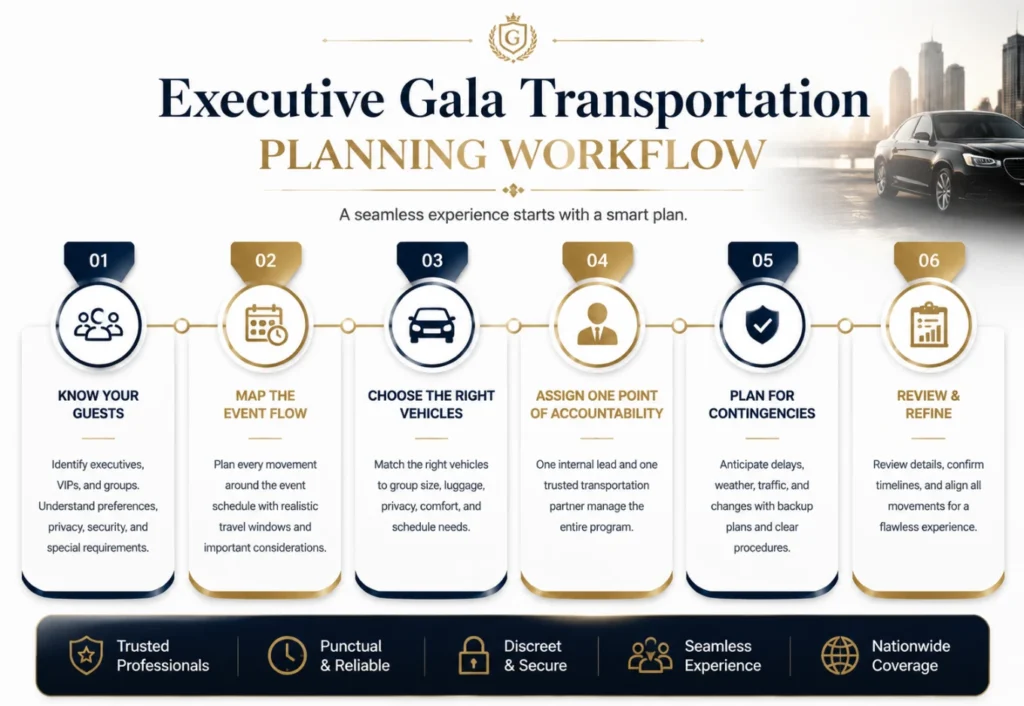
Build in Contingencies Before They Are Needed
Holiday events frequently coincide with heavy traffic, winter weather, flight disruptions, and programs that run later than expected. A professional transportation plan anticipates these variables with appropriate buffers, alternate routes, backup pickup locations, and clear escalation procedures.
The best time to determine what happens when the schedule changes is before it changes.
Why Centralized Transportation Coordination Matters
When a company is moving multiple executives, clients, and guests, fragmented transportation arrangements create unnecessary complexity.
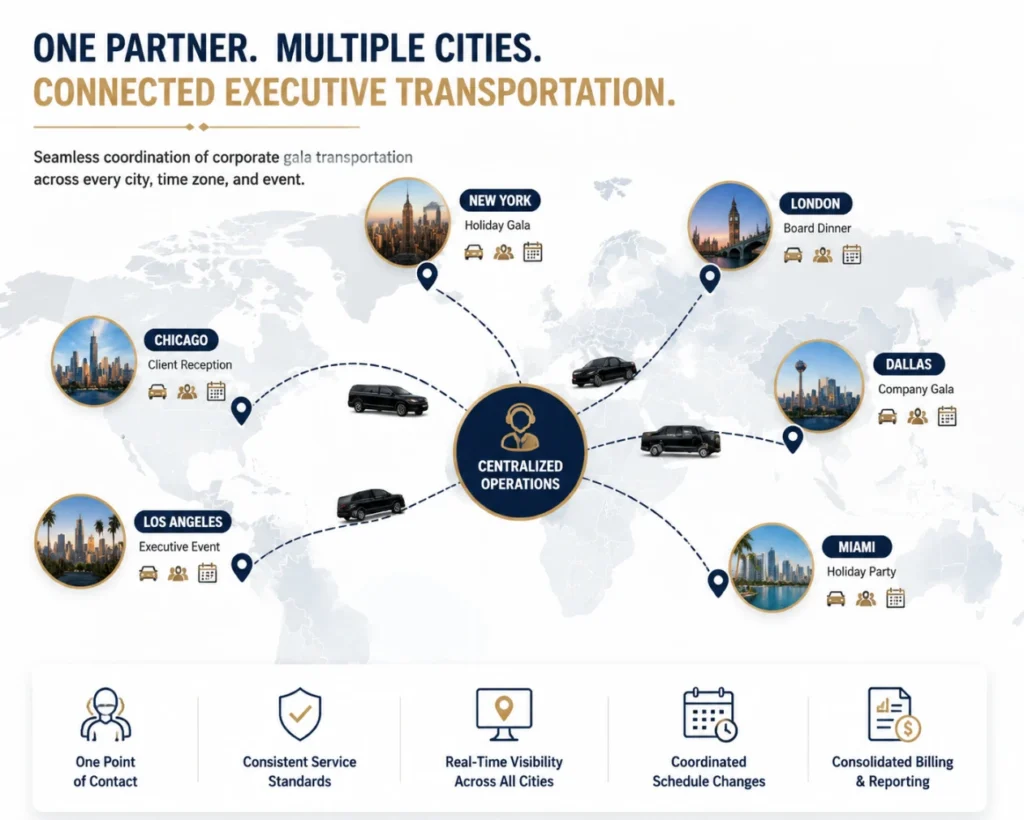
Centralized transportation coordination brings every movement under one operational structure, providing:
- One point of accountability
- Consistent chauffeur and service standards
- Real-time visibility across active movements
- Centralized communication
- Coordinated schedule changes
- Clear escalation procedures
- Consolidated reporting and billing
Instead of the executive assistant, event director, or travel manager supervising multiple vehicles and providers, the transportation partner manages the operation.
This becomes even more valuable when a company has holiday events in multiple cities.
A nationwide or global transportation partner can coordinate movements across offices, cities, airports, and time zones under the same service standards and communication structure, while experienced local teams handle execution on the ground.
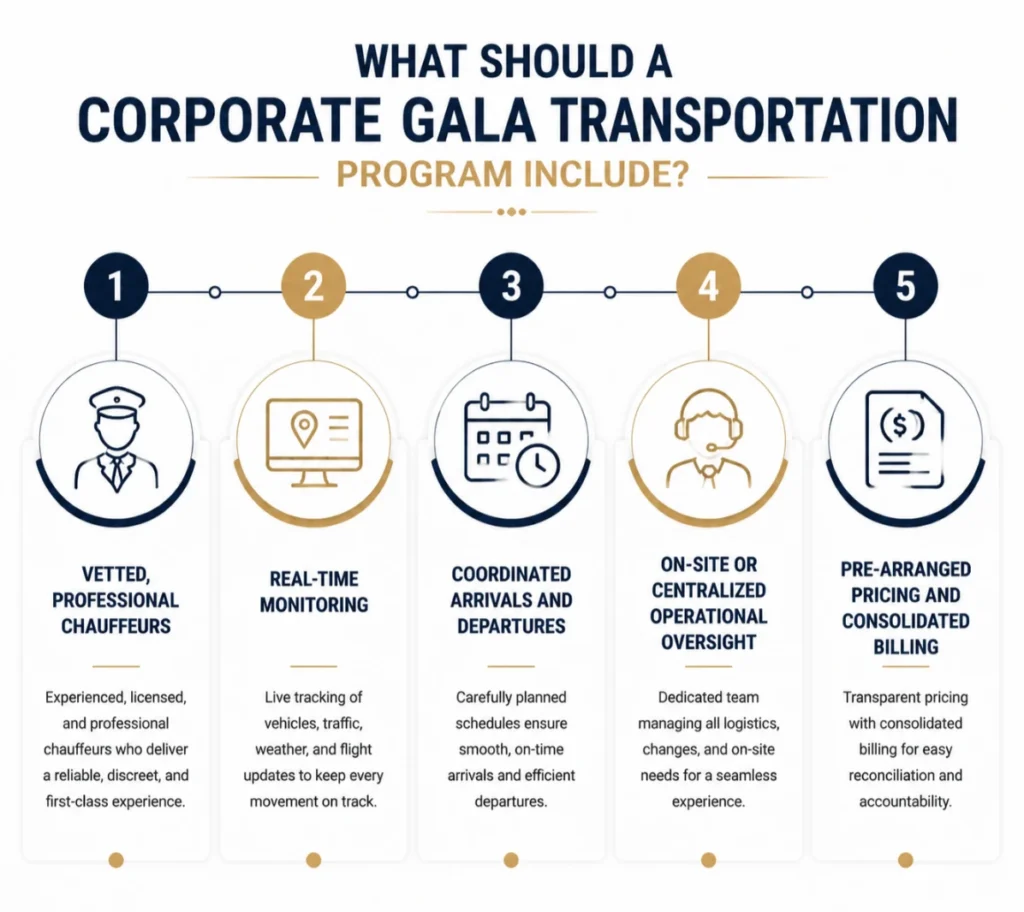
What Should a Corporate Gala Transportation Program Include?
1. Vetted, Professional Chauffeurs
Executive and VIP transportation requires more than driving ability. Chauffeurs should meet established licensing, background, insurance, presentation, discretion, and service standards.
Professional judgment matters, particularly when transporting senior executives, board members, high-profile clients, or private principals.
2. Real-Time Monitoring
Traffic, weather, flight activity, schedule changes, and active movements should be monitored throughout the event.
If a flight is delayed, a dinner runs long, or an executive changes departure plans, the transportation operation should adjust without requiring the traveler to manage the change.
3. Coordinated Arrivals and Departures
Large events should not have every vehicle arriving at the same entrance or every guest requesting transportation at the same time.
Arrival and departure windows can be staggered around executive priority, guest groups, venue access, and the event schedule.
4. On-Site or Centralized Operational Oversight
Depending on the complexity of the event, event transportation may be managed through an on-site coordinator, a centralized 24/7 operations team, or both.
Either way, there should always be a clear point of accountability overseeing the movement.
5. Pre-Arranged Pricing and Consolidated Billing
Corporate transportation programs can eliminate dozens of individual bookings, receipts, and expense reports.
One account with centralized billing also makes it easier for travel and finance teams to understand transportation costs across the entire event or holiday program.
How Should Multi-Stop Gala Transportation Be Managed?
An executive’s evening might include an office departure, hotel stop, cocktail reception, gala, private dinner, after-party, and late-night return.
These movements should operate as one continuous itinerary rather than unrelated reservations. The transportation team should know the full schedule, expected departure windows, venue access points, guest requirements, and potential changes before the first movement begins. As the evening progresses, active oversight allows vehicles to be repositioned and schedules adjusted when dinners run late, speeches extend, guests change plans, or venue access conditions shift.
For the executive or guest, the experience should remain simple. The complexity belongs behind the scenes.
Managing Multiple Corporate Holiday Events Across Cities
For larger organizations, holiday gala season may involve events in New York, Chicago, Los Angeles, Miami, Dallas, London, or other company markets. Managing each city independently can create different service standards, billing processes, communication protocols, and escalation contacts.
Centralized multi-city executive transportation eliminates much of that fragmentation. One transportation partner can oversee the entire program while coordinating qualified local operations in each market. This gives executive assistants and corporate travel leaders a consistent point of contact and visibility across the complete program.
A schedule change in one city can also be understood within the context of the executive’s broader itinerary, particularly when executives are traveling between offices, events, or time zones.
That continuity is one of the greatest advantages of centralized transportation management. Setting Up a Corporate Transportation Account Before Gala Season.
A corporate account establishes the operating structure before the busy season begins. Companies should provide:
- Estimated guest counts and venue locations
- Event dates and possible alternate dates
- Executive, VIP, department, and group transportation requirements
- Billing preferences and cost centers
- Security, privacy, accessibility, or special-service requirements
- Primary communication and escalation contacts
When evaluating a transportation partner, ask:
- How are chauffeurs and local operating partners vetted?
- Who provides real-time operational oversight?
- Is live support available after normal business hours?
- How are weather, traffic, flight delays, and schedule changes managed?
- How are service standards maintained across different cities?
- Who takes ownership when something changes or goes wrong?
- Can all transportation be managed through one account and consolidated invoice?
For nationwide or global transportation programs, local affiliates are often an important part of the service model.
The more important question is not who physically owns every vehicle. It is who remains accountable for the experience from beginning to end.
A strong transportation partner should own the standards, communication, monitoring, escalation, and resolution regardless of which city the executive is traveling in.
Frequently Asked Questions
How early should a company book transportation for a corporate holiday party or gala?
Six to eight weeks ahead is a practical starting point for many corporate holiday events. Earlier planning is recommended for high-demand December dates, larger groups, multiple executives, specialized vehicles, or events requiring complex staging and coordination.
Can an executive assistant manage transportation for the entire guest list?
Yes. Centralized coordination allows one executive assistant, event planner, or travel manager to oversee the program while the transportation operations team manages confirmations, chauffeurs, staging, schedule changes, and live execution. This significantly reduces the amount of transportation follow-up required from the internal team.
What vehicles are typically used for corporate holiday events?
Executive sedans and SUVs are commonly used for individual executives, clients, and smaller groups, while Sprinter-style vans, mini coaches, and motor coaches can support larger groups. The right vehicle depends on passenger count, privacy, luggage or garment requirements, venue access, and how guests need to move throughout the event.
Does corporate gala transportation include late-night and after-party pickups?
Yes, when planned as part of the transportation program. Late-night coverage should be established in advance based on the event schedule, guest count, and expected departure patterns so executives and guests are not left arranging transportation when the event ends.
Why should companies centralize transportation for multiple holiday events?
Centralized coordination gives executive assistants, event teams, and corporate travel managers one point of accountability across multiple events, guests, and locations. It creates consistent standards, simplifies communication, and allows schedule changes and disruptions to be managed proactively.
Can one transportation company manage corporate holiday events in multiple cities?
Yes. A nationwide or global executive transportation partner can coordinate events across multiple cities and time zones under one account, communication structure, and operational standard. Local teams execute each movement while centralized oversight maintains consistency and accountability across the entire program.
What happens if an executive’s schedule changes during the event?
A professionally managed transportation program should be actively monitored so changes can be handled in real time. If a meeting runs late, a dinner extends, a flight is delayed, or a pickup location changes, the
transportation team adjusts the movement and communicates with the appropriate coordinator without shifting the operational burden back to the executive.
Conclusion
Corporate holiday transportation is ultimately about more than getting executives and guests to and from an event. For executive assistants, event leaders, lifestyle managers, and corporate travel teams, the real value is knowing that every movement is being planned, monitored, and managed through one accountable transportation structure.
Whether coordinating one major corporate gala or multiple year-end events across different cities and time zones, centralized oversight creates consistency, protects schedules, simplifies communication, and reduces the amount of transportation management required from the internal team.
The best executive transportation programs do not call attention to themselves.
Everything simply happens when and where it should, and the people responsible for the event know it is handled.
