
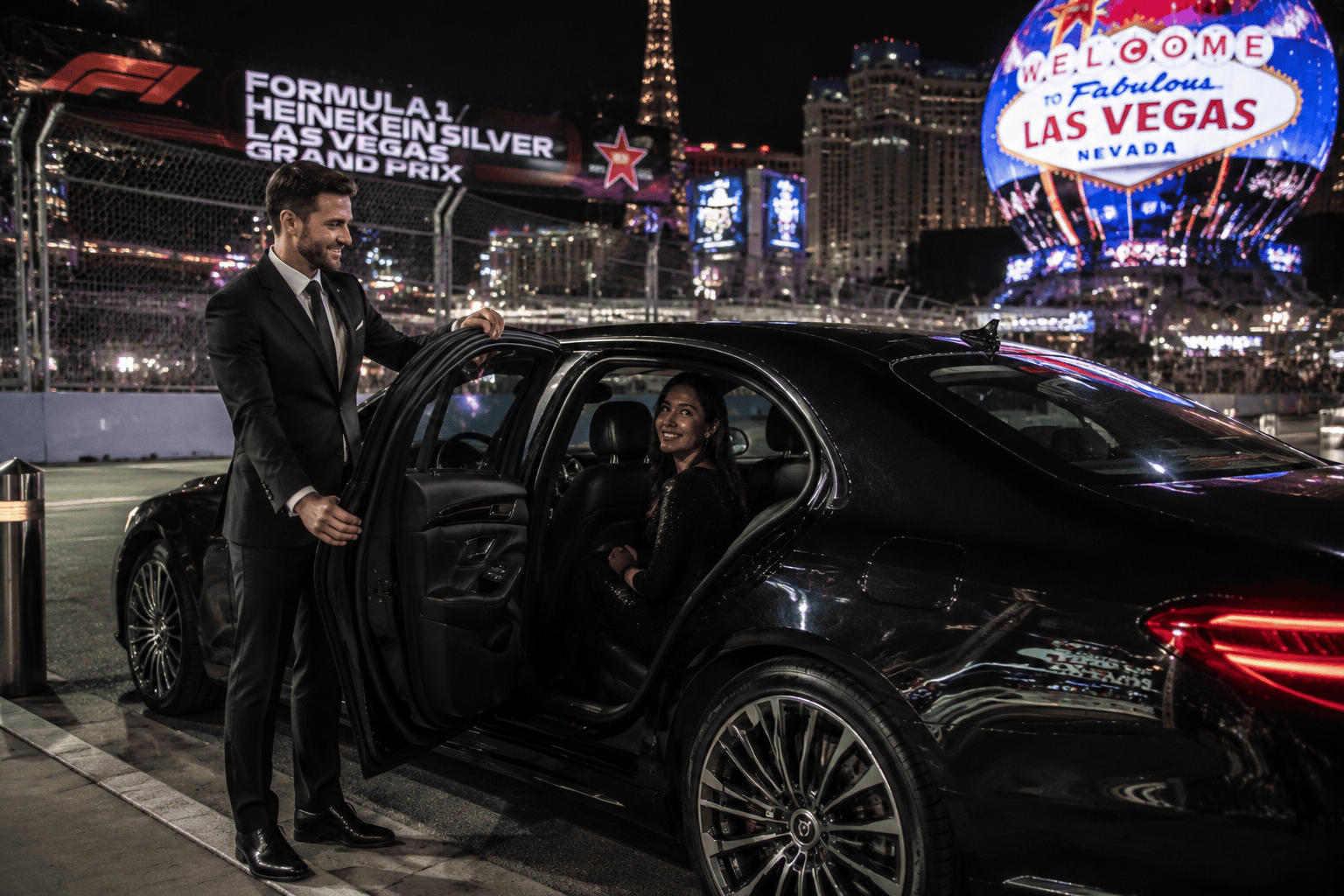
The Formula 1 Las Vegas Grand Prix creates one of the most complex executive transportation environments of the year.
Road closures transform the Las Vegas Strip into an active street circuit. Hotel entrances and vehicle access points can change. Traffic is redirected onto already congested alternate routes. Private aviation activity increases. Corporate hospitality, dinners, meetings, and race events often overlap within tightly controlled areas.
For executive assistants, senior lifestyle managers, athlete and talent representatives, family office teams, and corporate travel leaders, the challenge is not simply securing a luxury vehicle.
It is maintaining control of the principal’s complete itinerary while the transportation environment around it is constantly changing.
The most effective approach is to manage airport and FBO arrivals, hotel transfers, business meetings, hospitality events, race movements, dinners, late-night changes, and departures through one coordinated transportation structure with centralized oversight and experienced local execution.
The principal should experience a seamless journey. The complexity belongs behind the scenes.
Why Is Transportation So Complex During the Las Vegas Grand Prix?
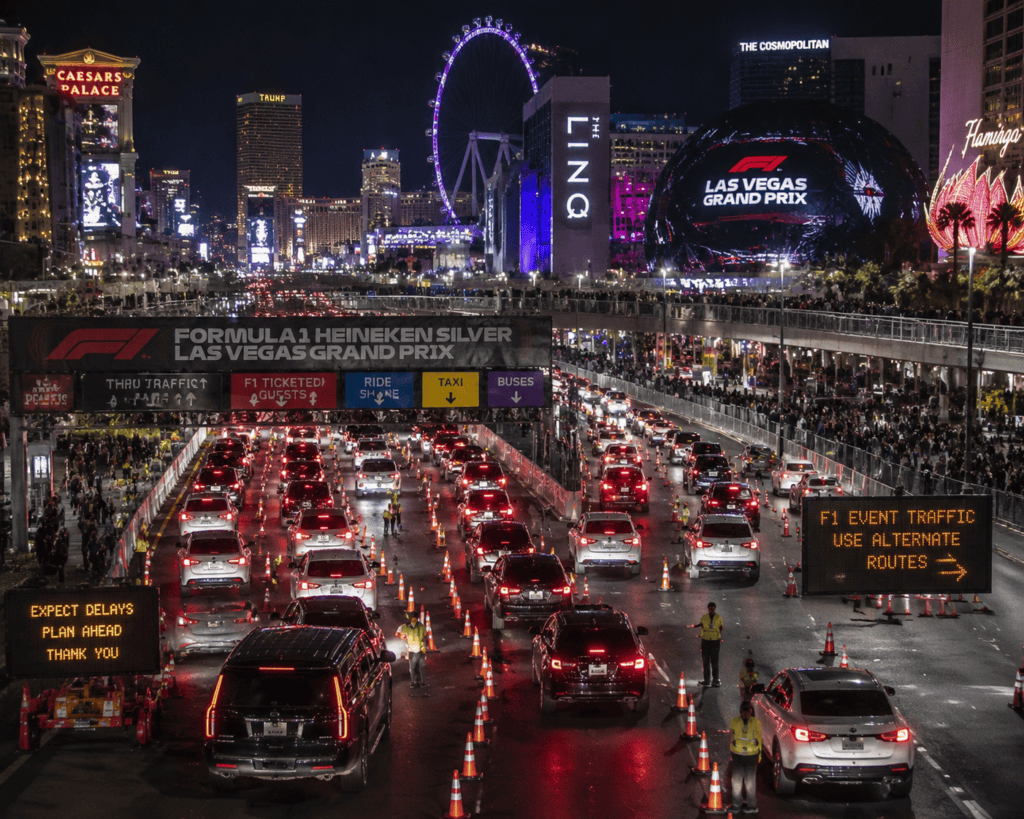
The Las Vegas Grand Prix is unusual because the race circuit incorporates major public roads through the heart of the resort corridor.
As race operations begin, normal traffic patterns change dramatically. Road closures, security restrictions, pedestrian activity, controlled access points, and displaced traffic can affect even relatively short movements.
At the same time, executives and VIP guests may be moving between:
- Commercial airports and private aviation terminals
- Strip hotels and resorts
- Corporate hospitality venues
- Paddock and race experiences
- Business meetings
- Sponsor events
- Private dinners
- Entertainment venues
- After-parties
- Off-Strip locations
- Early-morning departure flights
A transportation plan built around normal Las Vegas drive times is therefore not enough. The operation must be built around the event.
1. Plan the Entire VIP Itinerary Before Arrival
The strongest Formula 1 transportation plans begin with the principal’s complete itinerary rather than individual rides.
Before arrival, the transportation operations team should understand:
- Arrival airport or FBO
- Flight or tail information
- Hotel and preferred entrance
- Race and hospitality credentials
- Business meetings
- Corporate or sponsor events
- Dinner reservations
- Private events
- Passenger and luggage requirements
- Security requirements
- Expected departure windows
- Departure flight or onward destination Not every detail will remain the same.
That is precisely why the transportation team needs visibility into the entire itinerary. When one part changes, the next movement can be adjusted within the context of the principal’s complete schedule.
2. Centralize Transportation Instead of Managing Individual Rides
Fragmented transportation creates unnecessary risk during a high-profile event.
An airport transfer booked with one provider, race transportation with another, dinner transportation arranged separately, and private aviation handled through yet another contact creates multiple communication channels and multiple points of failure.
Centralized transportation coordination creates one operational structure across the entire itinerary.
For the executive assistant, lifestyle manager, business manager, or family office team, that means:
- One point of accountability
- One coordinated itinerary
- Consistent service standards
- Centralized chauffeur communication
- Real-time visibility across active movements
- Proactive schedule adjustments
- 24/7 live operational support
- Consolidated confirmations and billing
Instead of managing multiple chauffeurs and providers, the internal team has one transportation partner responsible for the operation.
That distinction becomes particularly valuable during Formula 1 weekend, when conditions can change quickly.
3. Coordinate Commercial and Private Aviation Arrivals
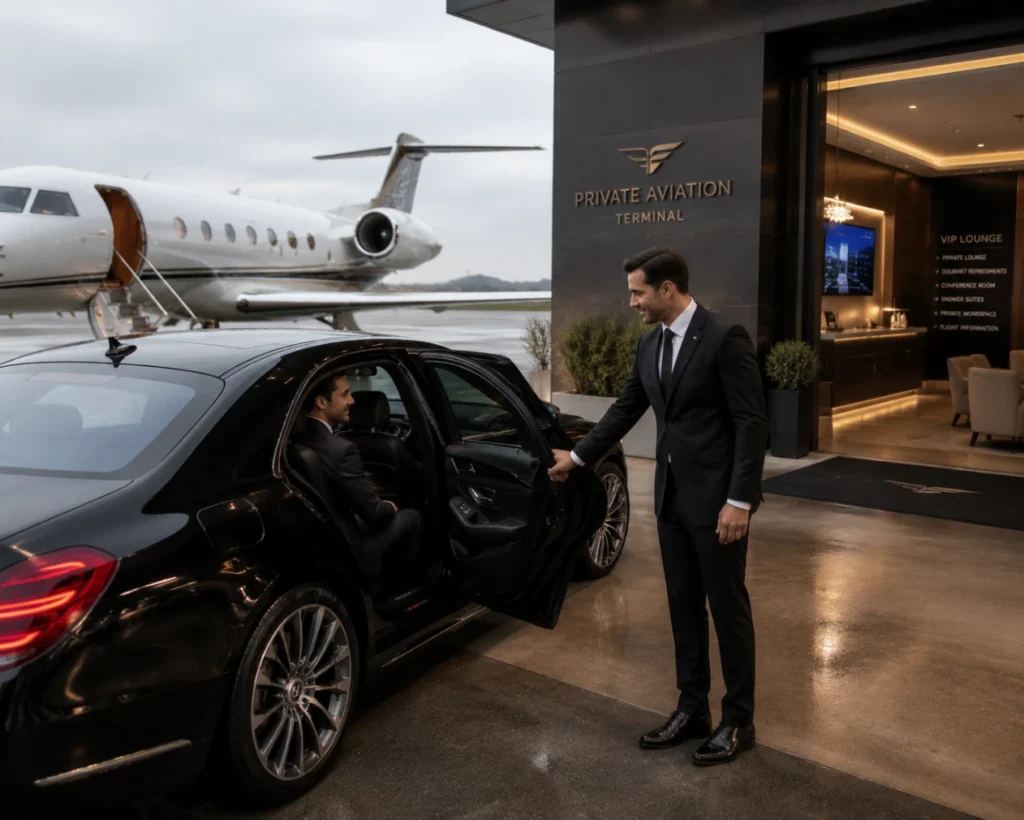
Many Formula 1 guests arrive through Harry Reid International Airport, while principals traveling privately may use executive airports and FBO facilities throughout the Las Vegas area.
Both require active coordination.
Commercial flights should be monitored so transportation adjusts to the traveler’s actual arrival.
Private aviation movements require coordination around aircraft timing, passenger release, FBO procedures, staging requirements, and the principal’s onward itinerary.
If a flight arrives late, the transportation operation should already be adapting.
The executive assistant should not have to begin calling drivers from another city or time zone to reorganize the arrival.
4. Build the Transportation Plan Around Race Operations
During Formula 1 weekend, a route that works earlier in the day may not work later.
Road closures, track activity, hotel access changes, security zones, and event traffic can alter how a principal reaches a hotel, hospitality venue, restaurant, or private event.
Transportation planning should therefore account for the race schedule and known access restrictions before each movement begins.
Experienced local operations teams should continually evaluate:
- Road closures
- Hotel access points
- Hospitality access
- Vehicle staging locations
- Traffic patterns
- Security restrictions
- Alternate routes
- Expected pedestrian congestion
The objective is not simply finding the fastest route.
It is determining the most reliable movement based on the conditions at that specific time.
5. Confirm Hotel and Venue Access Before Every Critical Movement
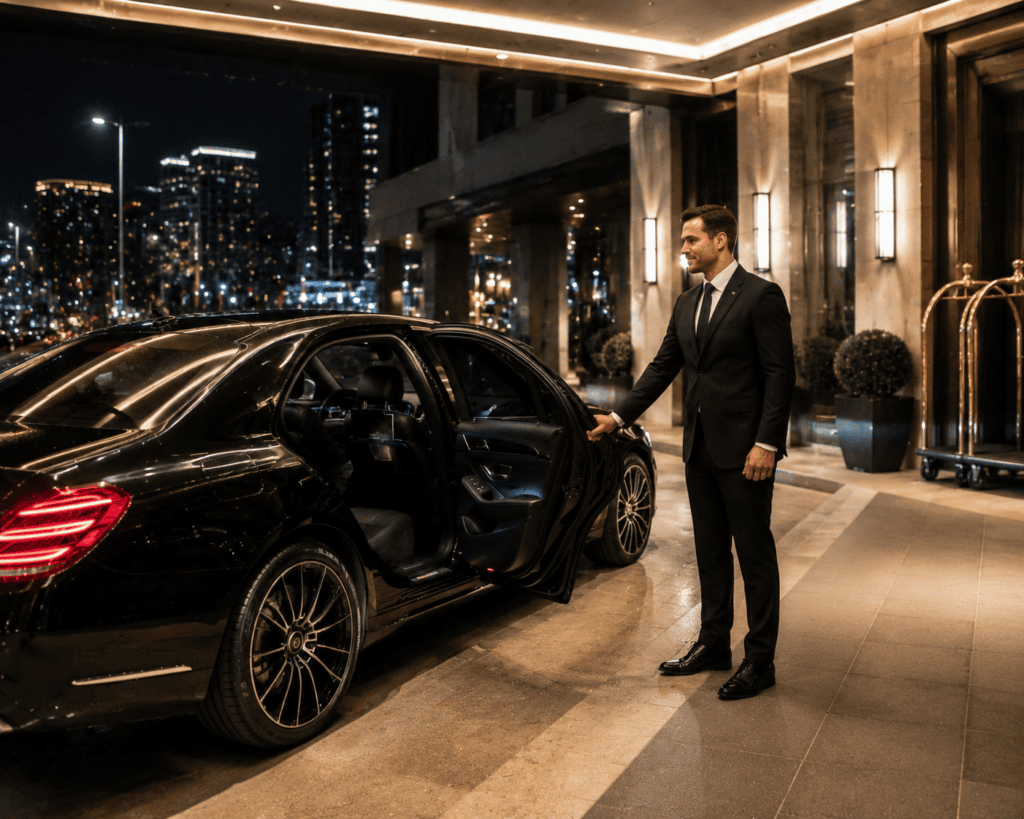
During a major street-circuit event, the hotel’s normal vehicle entrance may not always be the best or available access point.
The same applies to race hospitality areas, restaurants, private events, and corporate venues.
Access instructions should be reconfirmed as the event progresses rather than assumed to remain unchanged throughout the weekend.
The transportation operations team should coordinate those details with local chauffeurs before the principal is ready to depart.
For the traveler, the instruction should remain simple:
6. Where do I meet my chauffeur?
Everything required to answer that question belongs behind the scenes.
7. Match the Transportation Model to the Principal’s Schedule
Not every Formula 1 guest requires the same transportation structure.
A principal with a dense schedule of meetings, hospitality events, dinners, and race activities may benefit from a dedicated chauffeur and vehicle on hourly standby.
Another guest with fewer planned movements may be better served through coordinated point-to-point transportation.
Larger groups may require multiple SUVs, Sprinter-style vehicles, or coordinated group transportation.
The appropriate model depends on:
- Number of passengers
- Frequency of movements
- Schedule flexibility
- Hospitality access
- Luggage requirements
- Privacy
- Security
- Group size
- Expected waiting time
The vehicle should support the itinerary.
The itinerary should not be built around the vehicle.
8. Manage Schedule Changes in Real Time
Formula 1 weekend rarely follows the original itinerary perfectly.
Flights arrive late. Meetings extend. Hospitality plans change. Dinners move. Guests decide to attend another event. Race-related conditions affect pickup locations.
The transportation operation needs to adjust in real time.
If a meeting runs late, subsequent movements should be reviewed.
If a pickup point becomes inaccessible, an alternate location should be coordinated before the principal is ready to leave.
If dinner plans change, the transportation team should reposition accordingly.
The executive assistant, lifestyle manager, or business manager should not have to rebuild the transportation plan every time the schedule changes.
That is the value of live operational oversight.
9. Protect Privacy and Discretion
Formula 1 weekend attracts corporate leaders, celebrities, athletes, sponsors, family offices, investors, and other high-profile travelers.
Transportation often takes place around highly visible hotels, hospitality venues, restaurants, and private events.
Discretion therefore needs to be part of the operating standard.
Chauffeurs and transportation teams should handle passenger information, schedules, pickup locations, and travel details carefully.
For higher-profile principals, transportation may also need to integrate with executive protection teams, security personnel, personal assistants, or other members of the principal’s travel party.
The transportation operation should fit into that structure rather than operate independently from it.
10. Coordinate Multiple VIPs Under One Transportation Plan
Corporate hospitality programs, family offices, sports and entertainment groups, and lifestyle management firms may be responsible for several principals during the same weekend.
Each may have a different:
- Arrival time
- Hotel
- Race access
- Hospitality program
- Dinner schedule
- Security requirement
- Departure plan
Managing each traveler through separate providers creates unnecessary complexity.
Centralized transportation oversight allows multiple itineraries to operate simultaneously while maintaining visibility across the complete program.
This is particularly valuable for senior lifestyle managers and executive assistants coordinating several VIPs who may be moving independently throughout Las Vegas.
One operations structure can manage the complexity without requiring the internal team to supervise every vehicle.
11. Extend the Coordination Beyond Las Vegas
For many principals, Las Vegas is only one segment of a larger itinerary.
An executive may arrive from New York, Los Angeles, London, Dubai, or another international market and continue directly to another destination after the race.
A global executive transportation partner can coordinate those movements under the same operational structure.
That means the Las Vegas departure and the next-city arrival are understood as connected movements rather than unrelated reservations.
For lifestyle managers, executive assistants, family offices, and corporate travel teams managing complex travel across cities and time zones, that continuity can significantly reduce administrative work.
The transportation follows the traveler.
Why 24/7 Live Operational Support Matters
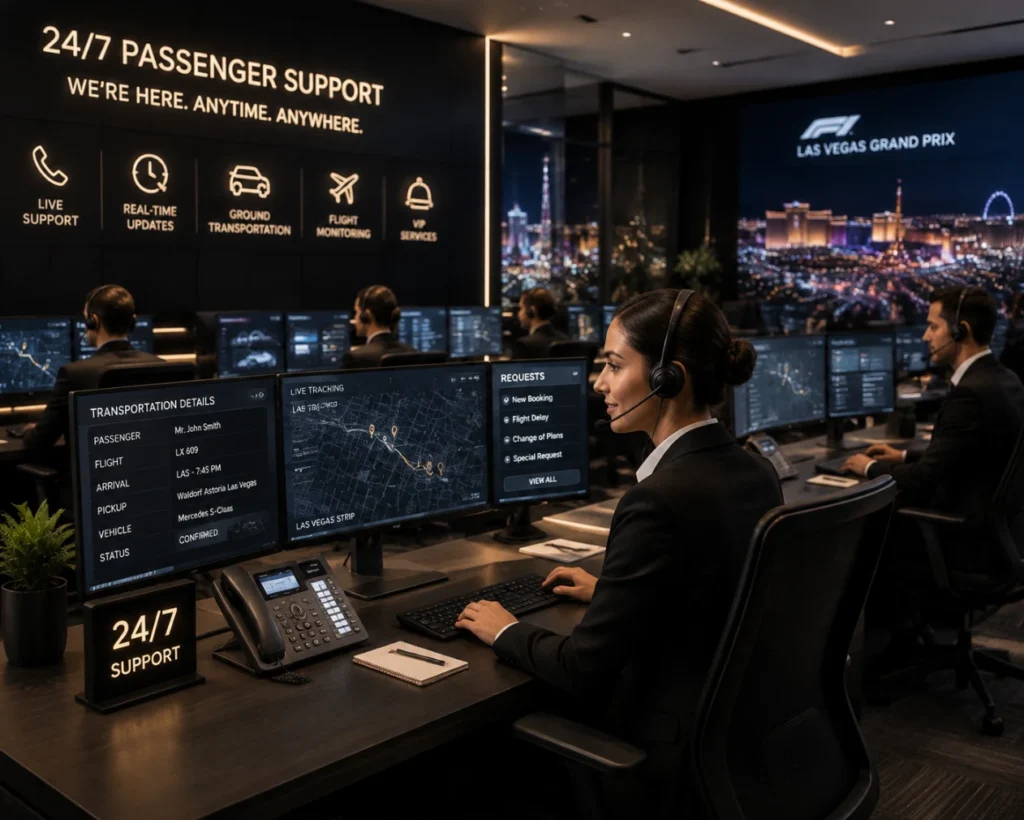
Formula 1 schedules extend well beyond normal business hours.
Flights arrive late. Dinners continue past midnight. Hospitality events change. Private aviation schedules move. Departures begin early the next morning.
Someone needs to remain accountable when the schedule changes.
A 24/7 transportation operations team can coordinate chauffeurs, update pickup times, adjust routing, communicate with local teams, and manage subsequent movements without waiting for the next business day.
For the person responsible for the principal, this creates a much more important benefit than simply having a phone number to call.
It means someone else is actively watching the transportation.
Plan the Departure Before Race Weekend Begins
Departure transportation should be part of the itinerary from the beginning. The transportation team should understand:
- Commercial flight or private aviation departure
- Required airport or FBO arrival time
- Hotel departure requirements
- Expected post-race traffic conditions
- Luggage
- Security requirements
- Other passengers
- Intermediate stops
- The principal’s next destination
Departure timing should be based on actual operating conditions and the importance of protecting the onward itinerary. For multi-city or international travelers, the Las Vegas departure may simply be the next segment of a much larger travel program.
What Should You Look for in an F1 Executive Transportation Partner?
During Formula 1 weekend, access to luxury vehicles alone is not enough. Executive assistants, lifestyle managers, family offices, athlete representatives, and corporate travel teams should evaluate whether a transportation partner can provide:
- Experienced local operations
- Professionally vetted chauffeurs
- Commercial airport and FBO coordination
- Real-time flight monitoring
- Knowledge of event-related access restrictions
- Live itinerary monitoring
- Multi-vehicle and multi-principal coordination
- 24/7 operational support
- Clear escalation procedures
- Executive protection coordination when required
- Nationwide and international coverage
- One point of accountability The most important question is not:
What vehicle will you send?
It is:
Who is managing the operation when the plan changes?
Frequently Asked Questions
How early should executive transportation be arranged for the Las Vegas Grand Prix?
Transportation should be arranged as early as practical once travel plans and hospitality arrangements are known. Demand for experienced chauffeurs, executive vehicles, larger-capacity vehicles, and multi-day transportation programs increases significantly around major Formula 1 events.
Should I hire a dedicated chauffeur for the entire Formula 1 weekend?
It depends on the itinerary. A dedicated or hourly chauffeur can be valuable for principals with dense schedules and frequent changes. Other travelers may be better served by centrally coordinated point-to-point transportation. The transportation model should be designed around the principal’s actual schedule.
Can transportation be coordinated from a private airport or FBO?
Yes. Executive transportation can be coordinated around private aviation arrivals and departures, including flight information, FBO procedures, passenger requirements, staging, and the principal’s onward itinerary.
How are road closures handled during F1 Las Vegas?
Experienced local transportation teams monitor known closures, access restrictions, traffic conditions, hotel procedures, and alternate routing throughout the event. Movement plans should be adjusted based on current conditions rather than normal Las Vegas drive times.
Can one transportation partner manage several VIPs with different schedules?
Yes. Centralized transportation coordination can manage multiple principals simultaneously while maintaining separate itineraries, chauffeur assignments, arrival information, security requirements, and departure plans under one operational structure.
What happens if the principal’s schedule changes during race weekend?
With real-time operational oversight, chauffeur positioning, pickup times, routing, and subsequent movements can be adjusted around the revised itinerary without requiring the principal’s team to rebuild each reservation individually.
Can transportation be coordinated across multiple cities or countries?
Yes. A nationwide or global executive transportation partner can manage the Las Vegas portion of the itinerary along with airport transfers and ground transportation at the principal’s other destinations, maintaining one communication structure and consistent standards across cities and time zones.
Why is 24/7 support important during Formula 1 weekend?
Formula 1 travel frequently includes late-night events, early departures, flight changes, and schedule adjustments outside normal business hours. Live 24/7 operational support ensures those changes can be addressed immediately without shifting responsibility back to the traveler or their team.
Conclusion
Managing executive transportation during the Formula 1 Las Vegas Grand Prix requires much more than reserving a luxury vehicle. It requires understanding the principal’s complete itinerary and managing airport or FBO transfers, hotels, hospitality, business meetings, race movements, dinners, security requirements, schedule changes, and departures as one connected operation.
For executive assistants, senior lifestyle managers, athlete and talent representatives, family office teams, and corporate travel leaders, centralized oversight creates the real value: one point of accountability in an environment where almost everything else is changing.
With experienced local execution, real-time monitoring, 24/7 operational support, and proactive contingency planning, the complexity stays where it belongs: behind the scenes. The principal experiences the event. Their team stays in control. The transportation is handled.
